Picture: AgrosceNa-NEXT, Alberto Sanz-Cobeña
Ammonia emissions are an important pathway for nitrogen losses from agricultural fields. When nitrogen is lost as ammonia, less is available for crops, and the losses can contribute to air pollution and wider environmental impacts.
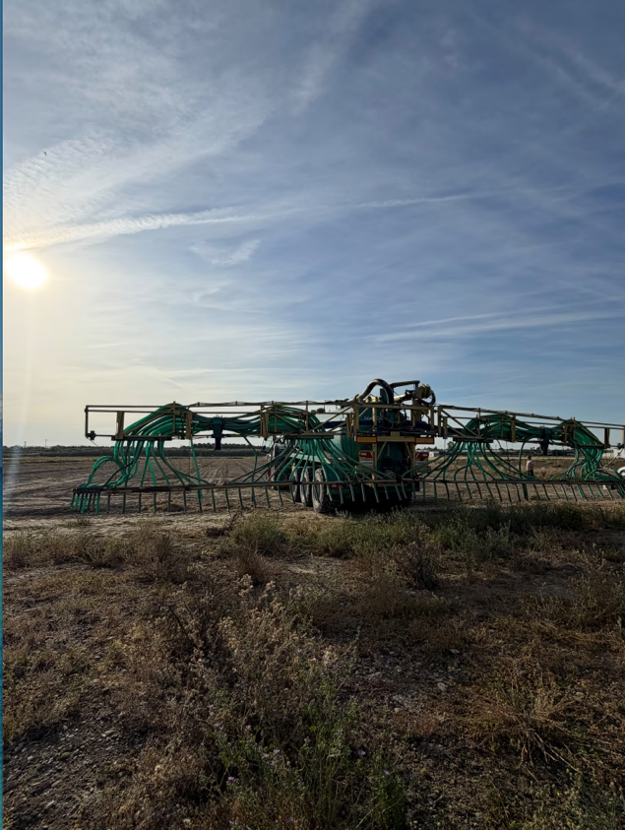
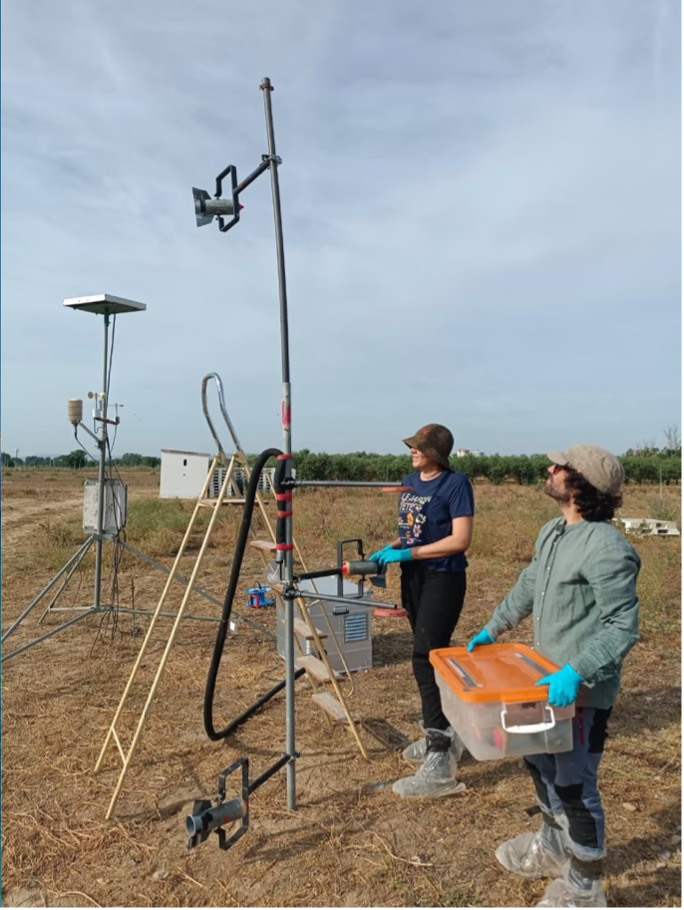
A recent field study in Zaragoza, Spain, provides an important first step for one of the activities of the AgNUE platform by comparing different techniques and tools used to quantify ammonia emissions under real field conditions. Read more about the AgrosceNa-NEXT field study here.
In AgNUE, researchers will compare different approaches for measuring ammonia volatilization across field campaigns in Spain, France, Denmark and the United States. The aim is to better understand how different methods perform across climates, crops, fertilisation practices and weather conditions.
The work is coordinated by Alberto Sanz-Cobeña from CEIGRAM-UPM, with Benjamin Loubet from INRAE as co-lead. The methods to be compared include integrated horizontal flux measurements, gradient flux methods, open flux chambers, inverse dispersion modelling and eddy covariance where available.
Each method has different strengths. Some provide robust field-scale measurements, while others may offer more practical and low-cost options for wider use. By comparing them under the same field conditions, researchers can better quantify the uncertainty linked to ammonia measurements and improve how results are interpreted across sites and studies.
For AgNUE, this is an important step towards building high-quality and comparable datasets on nitrogen losses. Better measurement methods will support improved models of nitrogen cycling and help identify mitigation strategies that can reduce nitrogen losses while maintaining agricultural productivity.