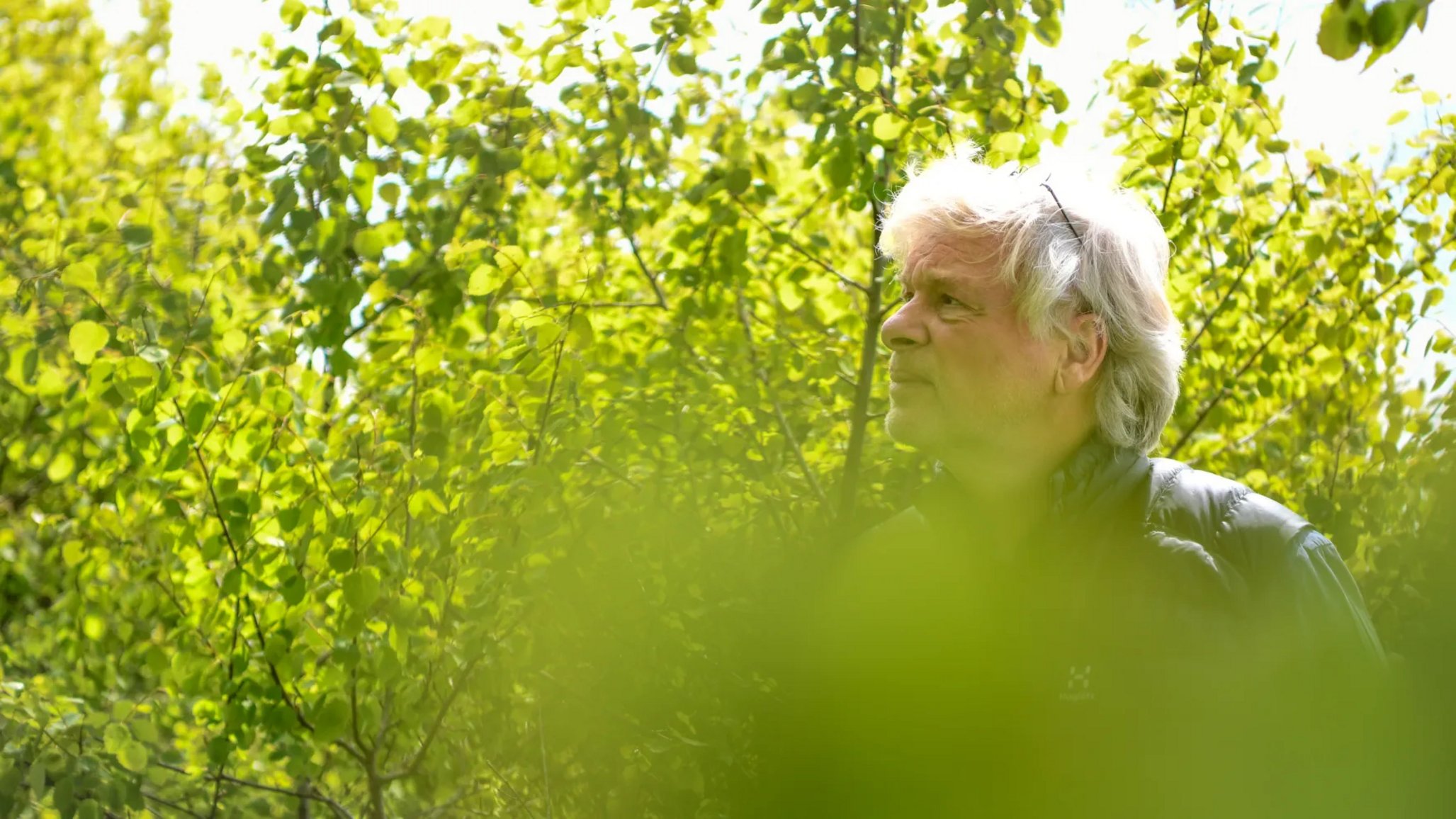
Professor Klaus Butterbach-Bahl has studied the relationship between agriculture and the climate for more than three decades how agriculture affects the climate.
His research has advanced our scientific understanding of how greenhouse gases are emitted from managed ecosystems and how to reduce these emissions. His findings are based on studies of rice paddies and livestock systems in Southeast Asia and Africa, as well as agricultural landscapes in Europe, South America, and Australia.
Today, as Co-Principal Investigator of AgNUE and Director of the Pioneer Center Land-CRAFT, anchored at Aarhus University, Klaus Butterbach-Bahl and his team bring this global perspective into one of the largest international efforts focused on agricultural nitrogen use efficiency (NUE).
A global perspective on agricultural challenges
Klaus Butterbach-Bahl’s research career has taken him across continents and production systems.
Throughout his work, one theme has remained constant: understanding how food production can be sustained while reducing the environmental and climate impacts of it.
Over the years, he has investigated greenhouse gas emissions from a wide range of agricultural and natural ecosystems, helping to establish scientific knowledge, which forms part of the foundation for climate assessments and mitigation strategies worldwide today.
His contributions to the field were recently recognized with the Sustainability Award by the Nobel Sustainability Trust, acknowledging more than 30 years of work dedicated to understanding and reducing agriculture’s environmental footprint.
Bringing decades of experience into AgNUE
In the AgNUE project, Klaus Butterbach-Bahl helps ensure that the scientific knowledge generated across the project can be compared and integrated across regions and disciplines.
He leads the work on establishing a harmonized framework for the AgNUE supersites, creating common measurement standards and protocols to quantify nitrogen flows and greenhouse gas emissions consistently across Europe and North America. This provides the necessary scientific foundation to compare agricultural systems, evaluate mitigation practices, and improve our understanding of nitrogen use efficiency under different environmental conditions.
Klaus also leads AgNUE’s researcher exchange programme and the development of a Global N₂O Network. These initiatives bring scientists working on greenhouse gas emissions from agricultural systems together.
Through these activities, the project AgNUE aims to strengthen international collaboration, accelerate knowledge sharing, and connect the findings of the project to broader global research efforts and perspectives.